


Naughty vegans eat wild oysters!
When danger approaches, an oyster does not hide.
It does not flee. It does not fight its attacker.
It does not move when you pick it up.
It lets it happen.
Like ripe nuts fallen from a tree, waiting to be picked up.
This raises a fundamental question:
Why are oysters actually shellfish — and not shell plants?
🌱 Plants, animals and energy
With sunlight, plants build their bodies from water, CO₂ and minerals.
Photosynthesis is the starting point of almost all life on Earth.
Animals cannot do this.
They must eat in order to grow and survive.
Shellfish feed on microscopic plants and animals
that they filter from the water.
👉 That is why they are not plants.
🧠 Do oysters feel?
Oysters have no central nervous system
and no brain.
It is therefore highly unlikely that they:
- experience fear
- feel pain
- experience stress
Such a sensory system:
- first needs to be developed
- costs a lot of energy to maintain
- is only useful if you can flee or respond
For oysters, this offered no evolutionary advantage.
🌊 Living with the tide
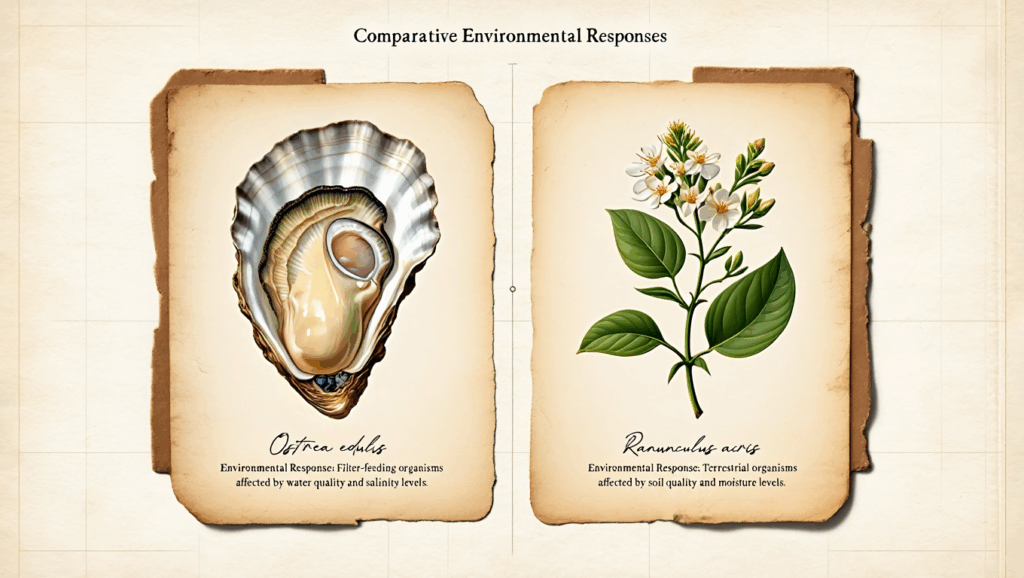
Still, oysters do respond to their environment.
When the water disappears at low tide:
- they close their shells
- lower their metabolism
- enter a kind of hibernation
As soon as the water returns, the oyster comes back to life.
Plants also respond to their environment:
- flowers open in sunlight
- and close again as evening falls
👉 No brain is required for this.
🌿 Veganism and oysters
More and more people who live consciously and plant-based
are therefore asking themselves this question:
Is eating oysters ethically justifiable?
For some, the answer is yes.
Naughty vegans happily enjoy wild oysters.
Without guilt.